Buy come2europe.eu ?
We are moving the project
come2europe.eu .
Are you interested in purchasing the domain
come2europe.eu ?
domain@kv-gmbh.de · 0541-91531010
Buy come2europe.eu ?
Do coal power plants look like nuclear power plants?
No, coal power plants do not look like nuclear power plants. Coal power plants typically have large smokestacks and may be located near coal mines or transportation infrastructure for coal. Nuclear power plants, on the other hand, have distinctive cooling towers and are often located near bodies of water for cooling purposes. Additionally, nuclear power plants have more stringent security measures and containment structures due to the nature of the radioactive materials they use. **
What is the history of thermal power plants?
Thermal power plants have been in existence since the late 19th century when the first coal-fired power plant was built in the United States. Over time, the technology has evolved to include different types of fuel sources such as natural gas, oil, and biomass. These power plants generate electricity by converting heat energy into electrical energy through the use of steam turbines. Despite advancements in renewable energy sources, thermal power plants continue to play a significant role in meeting the world's energy demands. **


Similar search terms for Power plants
Top-Angebote
Products related to Power plants:
-
From the Archives: Black History and Culture Value PackThis brand-new series is rooted in a profound commitment to shedding light on some of the important -- and often lesser-known -- aspects of Black history. From the Archives features landmarks, events, people, and artistic endeavors that have played...26,99 $*Shipping: 0,00 $Secure redirect to the provider
-
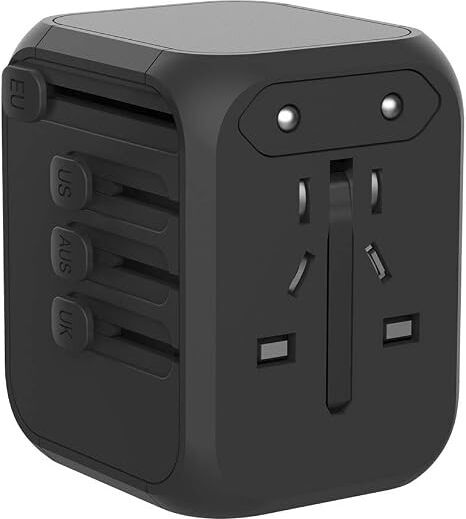
Griffin Power 30W International Travel Adapter - BlackTravel the world with confidence using the Griffin Power 30W International Travel Adapter. Designed for modern travellers, this compact and versatile adapter provides reliable charging for your essential devices in multiple countries, making it the perfect companion for business trips, holidays, and everyday travel. Featuring powerful 30W charging output, the adapter is ideal for powering smartphones, tablets, wireless earbuds, portable gaming devices, cameras, and other USB-powered electronics. With its universal compatibility and integrated international plug system, you can conveniently connect your devices in a wide range of regions without carrying multiple chargers or bulky adapters. The sleek all-in-one design includes interchangeable international plug configurations, allowing seamless use across various countries and power outlets. Whether you’re travelling through Europe, the United Kingdom, the United States, Asia, or other destinations, the Griffin Power Travel Adapter helps keep your devices charged and ready wherever you go. Equipped with advanced safety protection features, the adapter is designed to provide secure and stable charging performance. Built-in protection against overheating, overcharging, short circuits, and power surges helps safeguard both the adapter and your connected devices during use. Its compact lightweight construction makes it easy to slip into a backpack, suitcase, handbag, or carry-on luggage, while the elegant black finish gives it a modern professional appearance suitable for any travel setup. Perfect for frequent travellers, remote workers, students, and holidaymakers, the Griffin Power 30W International Travel Adapter combines convenience, portability, and dependable charging performance in one travel-friendly solution.12,49 £*Shipping: 0,00 £Secure redirect to the provider
-
beyondpower Beyond Power Travel Platform and CarbonFlex BarTAKE YOUR VOLTRA I WITH YOU The training set, consisting of the Beyond Power Travel Platform and the CarbonFlex Premium Grip (60 cm), is ideal for a varied and effective workout when you are travelling or have limited space at home. Together with the VOLTRA I, the strong Travel Platform made of...349,00 £*Shipping: 0,00 £Secure redirect to the provider



-
What is the history of hydroelectric power plants?
Hydroelectric power plants have a long history dating back to ancient times when water wheels were used to grind grain and perform other tasks. The first modern hydroelectric power plant was built in 1882 in Appleton, Wisconsin, and was used to provide electricity to a paper mill. The development of hydroelectric power plants accelerated in the 20th century, with the construction of large-scale facilities such as the Hoover Dam in the United States and the Three Gorges Dam in China. Today, hydroelectric power is a significant source of renewable energy, providing electricity to millions of people around the world. **
-
What is more environmentally friendly: coal power plants or nuclear power plants?
Nuclear power plants are generally considered more environmentally friendly than coal power plants. While both types of plants produce electricity with low greenhouse gas emissions, coal power plants release higher levels of carbon dioxide, sulfur dioxide, and nitrogen oxides, contributing to air pollution and climate change. On the other hand, nuclear power plants produce no greenhouse gas emissions during operation and have a smaller environmental footprint in terms of land use and waste generation. However, nuclear power plants do pose risks related to radioactive waste disposal and the potential for accidents, which must be carefully managed. **
-
What is the plan for shutting down coal power plants, nuclear power plants, and gas plants?
The plan for shutting down coal power plants, nuclear power plants, and gas plants varies by country and region. In general, the goal is to transition to cleaner and more sustainable energy sources such as wind, solar, and hydroelectric power. This may involve phasing out older, less efficient plants and replacing them with renewable energy infrastructure. Additionally, some regions are implementing policies to incentivize the closure of coal and gas plants, while others are investing in advanced nuclear technologies as part of their transition to a low-carbon energy system. Overall, the plan is to gradually reduce reliance on fossil fuels and nuclear power in favor of cleaner and more sustainable energy sources. **
-
What is the plan for shutting down coal-fired power plants, nuclear power plants, and gas plants?
The plan for shutting down coal-fired power plants involves transitioning to cleaner energy sources such as renewable energy like solar and wind power. Nuclear power plants are being phased out gradually as their licenses expire, with a focus on increasing energy efficiency and expanding renewable energy capacity. Gas plants are also being phased out in favor of cleaner alternatives, with a shift towards renewable energy sources and energy storage technologies. Overall, the goal is to reduce greenhouse gas emissions and transition to a more sustainable and environmentally friendly energy system. **


What are biogas plants and wood chip power plants?
Biogas plants are facilities that use organic waste, such as agricultural residues, food waste, and manure, to produce biogas through a process called anaerobic digestion. The biogas can then be used as a renewable energy source for heating, electricity generation, or as a vehicle fuel. Wood chip power plants, on the other hand, use wood chips or other types of biomass to generate electricity through a process called biomass combustion. These plants are considered a form of renewable energy because they use organic materials that can be replenished, and they produce lower levels of greenhouse gas emissions compared to fossil fuel power plants. **
What are fusion power plants?
Fusion power plants are a type of power plant that generate electricity by harnessing the energy produced from nuclear fusion reactions. Nuclear fusion is the process of combining two light atomic nuclei to form a heavier nucleus, releasing a large amount of energy in the process. Fusion power plants aim to replicate the same process that powers the sun and stars, using isotopes of hydrogen such as deuterium and tritium as fuel. If successfully developed, fusion power plants could provide a nearly limitless and clean source of energy with minimal environmental impact. However, the technology is still in the experimental stage and has not yet been commercially viable. **
Top-Angebote
Products related to Power plants:
-
DK RHS Propagating Plants - How To Create New Plants For FreeFill your garden with beautiful plants for next-to-nothing Do you long to grow your own plants from scratch? This complete guide from the experts at the RHS will teach you how to propagate every type of plant. If you're a thrifty gardener who wants more plants for free, then this book is perfect for you! From fruit trees and ornamental shrubs to exotic orchids and succulents, get all the info you need to propagate 1,500+ garden plants. Crammed with hundreds of step-by-step tutorials and clear advice, ranging from straightforward and simple to more in-depth and challenging. The rating system in the plant-by-plant A-Z dictionaries provides you with a quick reference to the relative ease or difficulty of each method of propagation. How long do your seedlings need to germinate? What makes a healthy stem cutting? How do you know what type of rootstock to use when grafting plants? Find out the answer to these questions and more in the most comprehensive guide to propagating plants ever published.9,99 £*Shipping: 2,99 £Secure redirect to the provider
-
From the Archives: Black History and Culture Value PackThis brand-new series is rooted in a profound commitment to shedding light on some of the important -- and often lesser-known -- aspects of Black history. From the Archives features landmarks, events, people, and artistic endeavors that have played...26,99 $*Shipping: 0,00 $Secure redirect to the provider
-
Griffin Power 30W International Travel Adapter - BlackTravel the world with confidence using the Griffin Power 30W International Travel Adapter. Designed for modern travellers, this compact and versatile adapter provides reliable charging for your essential devices in multiple countries, making it the perfect companion for business trips, holidays, and everyday travel. Featuring powerful 30W charging output, the adapter is ideal for powering smartphones, tablets, wireless earbuds, portable gaming devices, cameras, and other USB-powered electronics. With its universal compatibility and integrated international plug system, you can conveniently connect your devices in a wide range of regions without carrying multiple chargers or bulky adapters. The sleek all-in-one design includes interchangeable international plug configurations, allowing seamless use across various countries and power outlets. Whether you’re travelling through Europe, the United Kingdom, the United States, Asia, or other destinations, the Griffin Power Travel Adapter helps keep your devices charged and ready wherever you go. Equipped with advanced safety protection features, the adapter is designed to provide secure and stable charging performance. Built-in protection against overheating, overcharging, short circuits, and power surges helps safeguard both the adapter and your connected devices during use. Its compact lightweight construction makes it easy to slip into a backpack, suitcase, handbag, or carry-on luggage, while the elegant black finish gives it a modern professional appearance suitable for any travel setup. Perfect for frequent travellers, remote workers, students, and holidaymakers, the Griffin Power 30W International Travel Adapter combines convenience, portability, and dependable charging performance in one travel-friendly solution.12,49 £*Shipping: 0,00 £Secure redirect to the provider
-
Do coal power plants look like nuclear power plants?
No, coal power plants do not look like nuclear power plants. Coal power plants typically have large smokestacks and may be located near coal mines or transportation infrastructure for coal. Nuclear power plants, on the other hand, have distinctive cooling towers and are often located near bodies of water for cooling purposes. Additionally, nuclear power plants have more stringent security measures and containment structures due to the nature of the radioactive materials they use. **
-
What is the history of thermal power plants?
Thermal power plants have been in existence since the late 19th century when the first coal-fired power plant was built in the United States. Over time, the technology has evolved to include different types of fuel sources such as natural gas, oil, and biomass. These power plants generate electricity by converting heat energy into electrical energy through the use of steam turbines. Despite advancements in renewable energy sources, thermal power plants continue to play a significant role in meeting the world's energy demands. **
-
What is the history of hydroelectric power plants?
Hydroelectric power plants have a long history dating back to ancient times when water wheels were used to grind grain and perform other tasks. The first modern hydroelectric power plant was built in 1882 in Appleton, Wisconsin, and was used to provide electricity to a paper mill. The development of hydroelectric power plants accelerated in the 20th century, with the construction of large-scale facilities such as the Hoover Dam in the United States and the Three Gorges Dam in China. Today, hydroelectric power is a significant source of renewable energy, providing electricity to millions of people around the world. **
-
What is more environmentally friendly: coal power plants or nuclear power plants?
Nuclear power plants are generally considered more environmentally friendly than coal power plants. While both types of plants produce electricity with low greenhouse gas emissions, coal power plants release higher levels of carbon dioxide, sulfur dioxide, and nitrogen oxides, contributing to air pollution and climate change. On the other hand, nuclear power plants produce no greenhouse gas emissions during operation and have a smaller environmental footprint in terms of land use and waste generation. However, nuclear power plants do pose risks related to radioactive waste disposal and the potential for accidents, which must be carefully managed. **
Similar search terms for Power plants
-
beyondpower Beyond Power Travel Platform and CarbonFlex BarTAKE YOUR VOLTRA I WITH YOU The training set, consisting of the Beyond Power Travel Platform and the CarbonFlex Premium Grip (60 cm), is ideal for a varied and effective workout when you are travelling or have limited space at home. Together with the VOLTRA I, the strong Travel Platform made of...349,00 £*Shipping: 0,00 £Secure redirect to the provider
-
What is the plan for shutting down coal power plants, nuclear power plants, and gas plants?
The plan for shutting down coal power plants, nuclear power plants, and gas plants varies by country and region. In general, the goal is to transition to cleaner and more sustainable energy sources such as wind, solar, and hydroelectric power. This may involve phasing out older, less efficient plants and replacing them with renewable energy infrastructure. Additionally, some regions are implementing policies to incentivize the closure of coal and gas plants, while others are investing in advanced nuclear technologies as part of their transition to a low-carbon energy system. Overall, the plan is to gradually reduce reliance on fossil fuels and nuclear power in favor of cleaner and more sustainable energy sources. **
-
What is the plan for shutting down coal-fired power plants, nuclear power plants, and gas plants?
The plan for shutting down coal-fired power plants involves transitioning to cleaner energy sources such as renewable energy like solar and wind power. Nuclear power plants are being phased out gradually as their licenses expire, with a focus on increasing energy efficiency and expanding renewable energy capacity. Gas plants are also being phased out in favor of cleaner alternatives, with a shift towards renewable energy sources and energy storage technologies. Overall, the goal is to reduce greenhouse gas emissions and transition to a more sustainable and environmentally friendly energy system. **
-
What are biogas plants and wood chip power plants?
Biogas plants are facilities that use organic waste, such as agricultural residues, food waste, and manure, to produce biogas through a process called anaerobic digestion. The biogas can then be used as a renewable energy source for heating, electricity generation, or as a vehicle fuel. Wood chip power plants, on the other hand, use wood chips or other types of biomass to generate electricity through a process called biomass combustion. These plants are considered a form of renewable energy because they use organic materials that can be replenished, and they produce lower levels of greenhouse gas emissions compared to fossil fuel power plants. **
-
What are fusion power plants?
Fusion power plants are a type of power plant that generate electricity by harnessing the energy produced from nuclear fusion reactions. Nuclear fusion is the process of combining two light atomic nuclei to form a heavier nucleus, releasing a large amount of energy in the process. Fusion power plants aim to replicate the same process that powers the sun and stars, using isotopes of hydrogen such as deuterium and tritium as fuel. If successfully developed, fusion power plants could provide a nearly limitless and clean source of energy with minimal environmental impact. However, the technology is still in the experimental stage and has not yet been commercially viable. **
* All prices are inclusive of VAT and, if applicable, plus shipping costs. The offer information is based on the details provided by the respective shop and is updated through automated processes. Real-time updates do not occur, so deviations can occur in individual cases. ** Note: Parts of this content were created by AI.